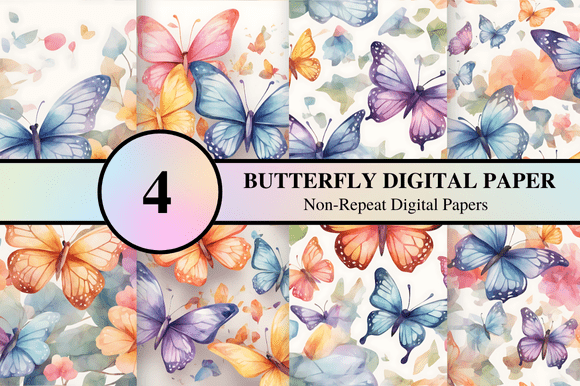
Butterfly Digital Paper: A Practical Review of Its Design, Usability, and Real-World Value
Digital paper has become an essential resource for anyone who values structure without rigidity. Among the many options available, Butterfly Digital Paper has drawn consistent attention for its thoughtful design and practical orientation. Rather than offering yet another generic template collection, it approaches digital stationery with a clear sense of purpose. This article examines what Butterfly Digital Paper actually delivers, how it performs across different workflows, and whether it earns a place in your digital toolkit.
What Butterfly Digital Paper Is and Why It Deserves Attention
Butterfly Digital Paper is a curated set of digitally optimized paper templates designed primarily for use in note-taking apps, digital planning platforms, and creative software. It includes a range of page layouts such as lined, dotted, grid, dot grid, graph, and specialized planners, all formatted for compatibility with popular applications like GoodNotes, Notability, Procreate, and similar tools. The product stands out not because of a single revolutionary feature, but because of the care taken in its construction and the consistency across its offerings.
What makes Butterfly Digital Paper worth discussing is its attention to the small details that affect daily use. Margins, spacing, line weight, and color palettes have been adjusted to reduce visual fatigue while maintaining clarity. The templates are intended to feel natural rather than mechanical, which matters when you spend hours working within them. For professionals, creators, and students who rely on digital note-taking, this level of consideration can significantly influence productivity and comfort.
Core Characteristics and Design Philosophy
The design philosophy behind Butterfly Digital Paper centers on balance. The templates avoid both the overdesigned aesthetic that distracts and the bare-bones minimalism that offers little guidance. Each layout provides enough structure to organize content effectively, but leaves room for personal annotation styles, sketches, or diagrams.
Key characteristics include:
- Consistent spacing and alignment – Grids and lines maintain uniform intervals across all templates, which is critical when switching between page types during a single session.
- Neutral color options – Several color variants, including warm tones and grayscale, allow users to choose backgrounds that reduce eye strain without sacrificing readability.
- High-resolution formatting – The templates are rendered at resolutions appropriate for retina and high-DPI displays, ensuring crisp edges even when zoomed in.
- Modular page structures – Planners and specialized pages include clearly defined sections for tasks, notes, priorities, and reflections, making them immediately usable without additional setup.
- Print-ready capability – While designed for digital use, the templates also export cleanly for printing, adding versatility for those who need both formats.
These characteristics reflect a deliberate focus on utility rather than novelty. The design choices support sustained use, which is often where digital paper products fail. Many templates look appealing in previews but become tiresome after repeated use. Butterfly Digital Paper avoids that pitfall by prioritizing readability and adaptability.
Practical Value in Daily Workflows
The practical value of Butterfly Digital Paper becomes apparent when integrated into real workflows. Consider a freelance designer who manages projects across multiple clients. Using a dot grid layout for daily task tracking, a weekly planner for deadline management, and a lined page for client meeting notes, all within the same digital notebook, creates a seamless experience. The consistent visual language across templates reduces cognitive load because the eye does not need to adjust to different spacing or line weights between pages.
Similarly, an educator preparing lecture notes can rely on the graph and lined templates for organized content, while the blank or lightly dotted pages work well for diagrams and visual explanations. The ability to mix layouts without leaving the same notebook environment is a small but meaningful advantage. It supports the kind of fluid thinking that happens when you move between structured writing and freeform sketching.
For bloggers and content creators who brainstorm, outline, and revise digitally, the modular planner pages offer a lightweight project management system. Instead of maintaining a separate task manager, you can keep everything within one document, using the same template set across different projects. This reduces friction and helps maintain focus.
Small business owners managing daily operations may find the weekly and monthly planning templates particularly useful. They provide enough structure to track recurring tasks, appointments, and priorities without the complexity of full project management software. When paired with a digital stylus and a tablet, the experience approaches the tactility of paper while retaining the advantages of searchability, backup, and portability.
Real-World Performance Across Use Cases
In real-world use, Butterfly Digital Paper performs reliably across the scenarios it targets. The templates import cleanly into GoodNotes, Notability, Noteshelf, and Procreate without misalignment or distortion. Hyperlinked planners, where included, function correctly and navigate between sections without lag. This reliability is not trivial; poorly formatted digital paper can cause frustration when page elements shift or links break.
The usability extends to export workflows as well. When you need to share a completed page as a PDF or image, the templates maintain their formatting, and the content remains legible. This is particularly important for professionals who send meeting notes, project plans, or creative briefs to clients or colleagues. The output looks polished without requiring additional adjustment.
Consistency is another area where Butterfly Digital Paper excels. Because the entire collection follows the same design rules, you can combine multiple template types in a single document without visual discontinuity. This is harder to achieve than it sounds, as many digital paper sets vary subtly between layouts, leading to a disjointed feel. Butterfly avoids this by establishing clear spacing and color standards that carry across the entire product line.
Quality, Consistency, and Long-Term Reliability
Quality in digital paper is often invisible until something goes wrong. Blurry lines, mismatched margins, or inconsistent grid scaling can ruin a session. Butterfly Digital Paper maintains a high standard of production. The vector-based or high-resolution raster formats ensure that each line is sharp at any zoom level. The color palettes are calibrated to be easy on the eyes over long periods, which matters for anyone who spends hours in digital notebooks.
Long-term reliability depends on whether the templates remain useful over months and years. Butterfly Digital Paper does not rely on trendy design elements that age quickly. Its aesthetic is restrained and functional, which means it will not feel dated after a few seasons. This makes it a sound investment for users who prefer to build a consistent digital workspace and stick with it.
One aspect worth noting is the file management. Because Butterfly Digital Paper provides individual page files and complete notebook bundles, you can organize your templates according to your own structure. This flexibility supports both minimalists who want a single notebook and power users who maintain dozens of subject-specific files.
Who Benefits Most and in Which Situations
Butterfly Digital Paper serves a broad audience, but certain user groups will extract the most value from it.
- Professionals and entrepreneurs who need structured digital planning for meetings, projects, and goal tracking will find the planner layouts immediately useful. The balance of structure and flexibility suits the way many professionals think and work.
- Freelancers and creators who manage varied tasks across different clients or projects can use the template set to maintain a consistent organizational system without switching tools.
- Educators and students benefit from the clean, readable layouts that work well for lecture notes, study guides, and research logs. The ability to print pages also supports hybrid workflows.
- Bloggers, publishers, and marketers who outline content, draft ideas, and track editorial calendars can use the modular planners as lightweight content management tools.
- Serious hobbyists who engage in journaling, sketching, or personal project planning will appreciate the refined aesthetics and the flexibility to mix structured and freeform pages.
Situations where Butterfly Digital Paper performs best include daily note-taking, weekly and monthly planning, project organization, meeting documentation, and creative brainstorming. It is less suited to highly specialized use cases such as architectural drafting, musical notation, or data-heavy spreadsheets, where purpose-built tools are more appropriate.
Limitations and Considerations
No product is without limitations, and Butterfly Digital Paper is no exception. The template collection, while thoughtfully designed, may not cover every niche layout. Users who require very specific page structures, such as certain academic or scientific grids, may need to supplement with additional templates. The focus remains on general-purpose and professional planning, which covers the majority of use cases but not all.
Another consideration is that the product's value depends heavily on the user's comfort with digital note-taking workflows. If you prefer physical paper or have not yet integrated a tablet and stylus into your routine, the templates will not solve the fundamental adoption barrier. However, for those already using digital tools, the templates integrate seamlessly and require no learning curve.
Finally, while the color options are well chosen, users with very specific visual preferences may want more variety. The existing palette covers neutral, warm, and cool tones, but it does not offer extensive customization. For most users, the available options are sufficient, but the customization-minded may wish for greater control.
Final Observations and Recommendations
Butterfly Digital Paper earns its place through thoughtful design, consistent quality, and genuine practicality. It does not promise to transform your productivity overnight, nor does it need to. Instead, it provides a reliable foundation for organizing your digital work in a way that feels natural and sustainable. The templates reduce friction, support focus, and adapt to how different people actually work.
For anyone who uses digital notebooks regularly and values clarity over decoration, Butterfly Digital Paper is a worthwhile resource. It works well as a primary template set for daily use and integrates smoothly into existing workflows. If you are looking to upgrade from generic templates or want a cohesive system that holds up over time, this product deserves serious consideration.
The real test of any digital paper is whether you forget you are using it and simply get to work. Butterfly Digital Paper passes that test. It gets out of your way and lets your ideas, plans, and notes take center stage. That is exactly what good digital paper should do.