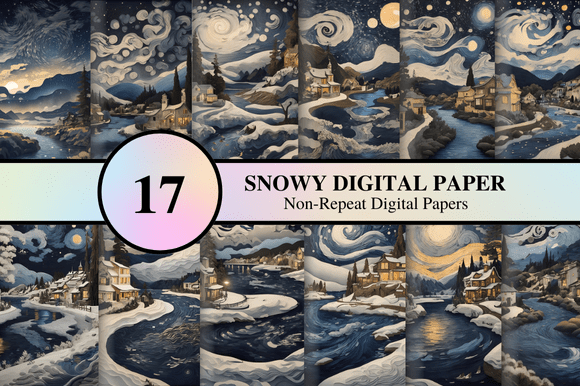
Snowy Digital Paper: A Practical Guide to Smarter Digital Note-Taking and Document Workflow
For years, the promise of a paperless workspace has hovered just out of reach. Many of us have tried—loading up tablets, styluses, and apps—only to find that digital note-taking can feel sterile, disconnected, or oddly inefficient compared to the tactile experience of pen on paper. Then you stumble across something like Snowy Digital Paper, and the entire premise shifts. It’s not just another note-taking app or a glorified PDF reader. It’s a thoughtfully designed digital environment that tries to bridge the gap between the freedom of analog and the power of digital. After spending several weeks integrating it into my own daily routine, I’ve found that it solves problems I didn’t even realize I had.
This article isn’t a sales pitch. It’s a grounded exploration of what Snowy Digital Paper actually does, who might benefit from it, and where it falls short. Whether you’re a freelancer drowning in client notes, a student trying to organize lecture materials, or a business owner looking for a cleaner document workflow, understanding this tool’s real-world value matters more than its feature list.
What Exactly Is Snowy Digital Paper?
At its core, Snowy Digital Paper is a platform designed for handwritten digital note-taking, document annotation, and structured information management. But that description doesn’t capture what makes it distinct. Unlike conventional apps that treat your handwriting as a static image, Snowy Digital Paper processes your input with a level of precision that makes your scribbles feel alive. Strokes are rendered with realistic pressure sensitivity, text remains crisp at any zoom level, and the overall experience mimics writing on high-quality paper—minus the smudging and wasted trees.
The platform works across multiple devices, but its sweet spot is on tablets with stylus support. You can import PDFs, images, or blank templates, then layer your handwriting, typed text, highlights, or embedded media on top. What separates Snowy Digital Paper from competitors is its intelligent layering system. Instead of locking you into rigid page structures, it lets you rearrange, group, or hide content layers dynamically. This means you can treat a single document like a living notebook—adding meeting notes, revising outlines, or inserting reference material without cluttering the original layout.
How Snowy Digital Paper Fits Into Real Workflows
The true test of any productivity tool isn’t how impressive it looks in a demo—it’s whether it survives the messiness of daily use. Here’s how Snowy Digital Paper performs across different contexts.
For professionals and business owners
If you’re juggling client meetings, project timelines, and ongoing correspondence, the ability to annotate PDFs directly is a game-changer. I’ve used Snowy Digital Paper to mark up contracts, sketch out workflow diagrams during brainstorming sessions, and keep running agendas that evolve week by week. The search functionality—which indexes your handwritten text—means you can find a note from three months ago without flipping through physical binders. For business owners who review proposals or regulatory documents, the layer system lets you keep original text intact while adding your own analysis on a separate layer. Nothing gets permanently altered, but everything stays accessible.
For creators and students
Creators often need space to think visually. Snowy Digital Paper supports infinite canvas-style pages for mind maps, storyboards, or rough sketches. Students, meanwhile, benefit from the ability to import lecture slides, type notes alongside them, and highlight key concepts without switching between apps. One of the less obvious advantages is the offline stability—you can work entirely without internet access, and your files sync when you reconnect. For anyone who’s lost work due to a spotty connection, that reliability matters more than flashy cloud features.
Key Characteristics That Set It Apart
Several features define the Snowy Digital Paper experience beyond the basics.
- Rendering fidelity: Handwriting appears natural at any magnification. Zoom in on a tiny margin note, and it remains sharp rather than pixelating.
- Flexible import/export: You can bring in PDFs, images, or plain text files. Export options include PDF, PNG, and a proprietary format that preserves all layers.
- Customizable templates: Grids, dot grids, lined paper, Cornell notes, blank canvases—you’re not locked into a single aesthetic.
- Layer management: Each annotation or addition sits on its own layer. You can hide, lock, reorder, or delete layers independently.
- Cross-device sync: Work on a tablet, review on a phone, edit on a desktop. The sync is reliable as long as you have an account.
- Battery efficiency: Unlike some resource-heavy creative apps, Snowy Digital Paper is optimized to avoid draining your device quickly.
These characteristics add up to an environment that feels responsive rather than laggy. The developers clearly prioritized the writing experience over unnecessary animation or bloated menus.
Real-World Scenarios and Applications
Let’s move beyond abstract features and into concrete situations where Snowy Digital Paper proves its worth.
- Meeting minutes that actually get referenced. Instead of typing bullet points during a meeting, you can sketch diagrams, note action items, and even record a voice memo linked to specific sections. Later, you search for “budget discussion” and find the exact handwritten note alongside the audio clip.
- Academic research organization. Import journal articles, highlight passages, write margin summaries, and group papers by theme. The layer system lets you separate your interpretations from the original text, so you never confuse a quote with your own commentary.
- Creative brainstorming. Start with a blank canvas, draw a central idea, and branch out with handwritten connections. You can add images for inspiration, then rearrange the entire layout without starting over.
- Legal or compliance documentation. Annotate contracts with questions or clarifications on a hidden layer, then share the clean original with colleagues. Your markup stays private unless you choose to reveal it.
- Personal journaling or habit tracking. Use a minimalist template to log daily reflections, track habits, or sketch ideas. The lack of distraction helps maintain focus.
In each scenario, what stands out is flexibility without complexity. You don’t need to learn a steep interface to get value. The tool adapts to your method rather than forcing you into a predefined workflow.
Strengths and Limitations Worth Considering
No tool is perfect, and Snowy Digital Paper has its trade-offs. Being honest about these helps you decide if it fits your needs.
Strengths:
- Handwriting recognition is surprisingly accurate, even for messy scribbles. This turns your analog notes into searchable assets.
- The layer system is genuinely innovative. It allows non-destructive editing and keeps your original content pristine.
- Offline functionality is robust. You can work for days without internet and sync everything seamlessly later.
- Battery consumption is lower than most creative or note-taking apps, which matters during long work sessions.
Limitations:
- Collaboration features are basic. If you need real-time co-editing or shared workspaces, you’ll find the current offering limited.
- The template library, while useful, isn’t as extensive as some dedicated planning apps. You may end up creating your own layouts.
- Advanced automation—like linking notes to calendar events or generating automatic summaries—is absent. It’s a tool for thinking, not for heavy automation.
- Sync speed can be slow when handling large files with many layers. Patience is required for big projects.
These limitations don’t negate the tool’s value, but they do define its scope. Snowy Digital Paper excels as a personal productivity and creativity environment, not as a team collaboration platform.
Evaluating Whether Snowy Digital Paper Is Right for You
Given its strengths and weaknesses, how do you decide if this tool belongs in your workflow? Start by asking yourself a few questions.
Do you regularly work with handwritten notes or annotated documents? If you’re someone who types everything and never touches a stylus, the core value of Snowy Digital Paper may be lost on you. It’s designed for people who think better with a pen—even a digital one.
Do you value organization over speed? The layer system encourages thoughtful structuring. If you prefer dumping everything into a single text file and searching later, a simpler app might serve you better.
Are you willing to invest time in setup? Importing existing documents, creating custom templates, and learning the layer management takes a few hours. That investment pays off once you’re established, but it’s not instant gratification.
Do you work primarily alone or in a small team? Snowy Digital Paper shines for individual use or small groups where sharing files via export is acceptable. Larger teams needing real-time collaboration should look elsewhere.
If you answered yes to most of these, Snowy Digital Paper is likely a strong fit. If you hesitated on several, try the free trial with a single project before committing. The best way to evaluate is to throw a real task at it and see how the tool handles your particular messiness.
Practical Expectations for New Users
When you first open Snowy Digital Paper, don’t expect an empty white canvas. The onboarding walks you through a sample notebook that demonstrates layers, templates, and search. Take the time to experiment with that sample—erase things, add layers, export to PDF. Understanding the layer system early prevents frustration later.
One tip that helped me: create a dedicated “scratch” notebook for testing features. Use it to try pressure settings, different pen styles, and layer combinations without worrying about messing up real work. After a few hours, the interface becomes intuitive.
Also, pay attention to your export settings. If you share documents with colleagues who don’t use the platform, exporting as PDF with flattened layers ensures they see everything you intended. Keeping a separate copy in the proprietary format preserves editability for future revisions.
Final Thoughts on Snowy Digital Paper
Snowy Digital Paper doesn’t try to be everything to everyone. It focuses on delivering a high-quality, flexible digital writing environment that respects the way people naturally think and organize information. For professionals, creators, students, and business owners who rely on handwritten notes or document annotation, it offers a thoughtful alternative to both analog paper and bloated digital suites.
The learning curve is real but manageable. The limitations around collaboration and automation are real but not dealbreakers for individual use. Ultimately, Snowy Digital Paper succeeds because it treats your handwriting as something worth preserving—not as a second-class input method. If that resonates with how you work, it’s worth a serious look.