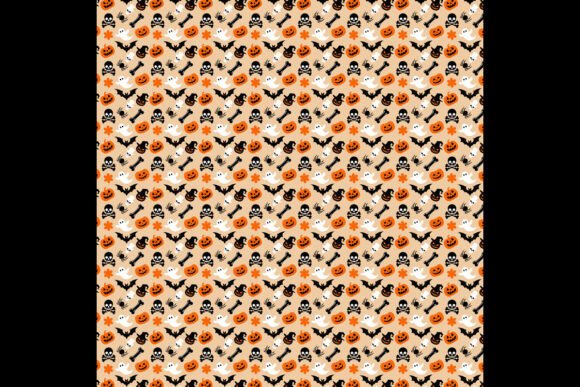
Halloween Pattern Design for All Creators
Halloween pattern design sits at the intersection of seasonal celebration and visual creativity. It refers to the deliberate arrangement of motifs such as pumpkins, bats, cobwebs, ghosts, skulls, autumn leaves, and haunted houses into repeatable or standalone layouts used on fabrics, digital assets, stationery, wall art, packaging, and more. Unlike a single illustration, a pattern repeats seamlessly or works as a thematic composition that can scale across products and spaces. Whether you are making wrapping paper for a small shop, designing a spooky background for a social media campaign, or teaching students about color theory, understanding how to build and evaluate a Halloween pattern matters more than just picking a cute icon set.
Why Different People Care About Halloween Pattern Design
A beginner looking for a quick project to sell on print-on-demand platforms has very different priorities than a professional illustrator aiming for a licensing deal. A classroom teacher may need free, grid-based patterns for a cut-and-paste activity, while a small business owner wants one cohesive set of patterns for an entire product line. The same topic serves different goals, and recognizing that upfront helps you decide how much time, money, and effort to invest.
Beginners and Hobbyists Seeking a Fun Start
If you are new to design or just want to make something festive for your own home, Halloween pattern design can feel both exciting and overwhelming. You might wonder whether you need fancy software or drawing skills. The truth is, you can start with simple repeating elements in free tools like Canva, GIMP, or even a basic mobile app. Focus on symmetry and consistent spacing. For example, take a single vector pumpkin, duplicate it across a grid, rotate every other row, and add a subtle background color. That is a pattern. Over time, you can explore more complex motifs like layered cemetery silhouettes or textured spider webs.
For hobbyists, ease of use and low cost often matter more than professional polish. A pattern with a few strong colors and clean shapes can look just as appealing on a tote bag or pillow as a highly detailed illustration. Start with one motif you truly like, keep your palette under four colors, and test the repeat before committing to a final file.
Freelancers and Creators Building a Portfolio
If you create patterns for clients or for your own shop, Halloween pattern design becomes a practical skill with commercial value. You need to balance creativity with reliability. A client might request a pattern that works both as an all-over print on fabric and as a hero graphic on a card. That means you need to build files at the right resolution, consider seamlessness, and think about scale. A pattern with tiny elements might look great on a phone case but lose detail on a bedsheet.
One useful approach is to design three variations of the same theme: a dense pattern for maximal coverage, a sparse version for a modern look, and a symmetrical layout for traditionalists. This flexibility increases your chances of selling to different customers. Also, naming your patterns descriptively — for example, “Midnight Moon Repeating Pattern” instead of just “Halloween Pattern” — helps buyers find you through search. For freelancers, long-term usefulness often depends on whether your patterns can be repurposed across seasons with minor color swaps.
Small Business Owners and Entrepreneurs
Selling products with Halloween themes is a seasonal business, but pattern design can extend beyond October if you choose motifs wisely. A pattern that features autumn leaves, owls, and muted earth tones can work from September through Thanksgiving. If you run an Etsy shop or local boutique, you care about quality, speed, and cost. You may not have time to create original patterns yourself. That is fine. Many entrepreneurs license pre-made Halloween pattern sets from marketplaces. Look for designs that come in multiple colorways and include both seamless tiles and single-use layouts. Read the license terms carefully: some allow unlimited commercial use, others cap the number of products. Also, check the resolution. A pattern saved at 300 dpi works for print, while 72 dpi works only for digital use.
For small business owners, presentation is key. Show the pattern on mockups — a t-shirt, a mug, a notebook — before listing the product. Good patterns look even better when buyers see them in context. You can also bundle patterns by mood: spooky, cute, vintage, or minimalist. This helps customers quickly find what fits their store’s aesthetic.
Educators and Workshop Leaders
Teaching Halloween pattern design offers rich learning value. You can introduce students to concepts like repetition, rhythm, symmetry, color harmony, and cultural symbolism. A classroom activity might involve cutting out paper shapes and repeating them on a grid, then scanning the result. For older students, you can teach digital tiling using Photoshop or Illustrator. The subject engages students because the theme is playful, yet it reinforces design fundamentals that apply broadly.
As an educator, you evaluate pattern design based on clarity of instruction and adaptability. A pattern that is too complex may frustrate beginners; one that is too simple may bore advanced students. Provide examples at different difficulty levels. For instance, a single-element pattern for beginners, a two-element pattern with alternating scales for intermediate students, and a multi-motif pattern with a hidden narrative for advanced groups. If you run a workshop, include a short discussion on cultural sensitivity — some Halloween symbols have specific origins, and it is worth acknowledging them.
Professionals and Experienced Designers
If pattern design is part of your professional toolkit, you prioritize flexibility, speed, and consistency across large sets. Halloween pattern design for you might mean creating a full collection of 10 to 20 patterns that coordinate in color, style, and theme. You may need to deliver vector files, raster files, and color swatches. Professional work often involves collaboration: a client may ask for a pattern that matches a brand’s typography or product line. That requires listening carefully and adjusting your usual style.
Reliability matters more than raw creativity. A pattern that repeats seamlessly without effort from the printer, that uses industry-standard color spaces, and that includes a proof sheet will earn you repeat clients. Experienced designers also know that a pattern’s commercial value depends on how easily it can be resized, recolored, or cropped. Build your files with layers and smart objects whenever possible. Save a version with a transparent background and one with a solid background. That small extra step saves clients hours later.
How to Evaluate Halloween Pattern Design for Your Needs
Before you invest time or money in a Halloween pattern, ask yourself a few questions. What will the pattern be used for? Print on fabric, digital background, stationery, or packaging? Different uses require different formats. How much control do you need over the final look? If you want to tweak colors or arrangement, you need an editable file. If you just need something ready to use, a flattened JPEG or PNG may suffice. What is your timeline? A custom pattern from a professional can take weeks. A marketplace pattern takes minutes.
Cost varies widely. Free patterns exist, but check the license — some forbid commercial use. Mid-range patterns on creative marketplaces often cost between $5 and $20 for a single design, while exclusive licenses from professional studios can run hundreds. Beginners and hobbyists rarely need exclusivity. Small business owners should weigh the cost against expected sales volume.
Quality assessment requires looking at the repeat. Does the seam show? Are the colors muddy when printed? Download a sample version if possible and test it at actual product size. A pattern that looks crisp on screen may look pixelated on a 24x36 inch poster. For digital use, file size and load time matter. Heavy patterns can slow a website or social graphic. Optimize your files without compromising too much on visual clarity.
Practical Examples Across Different Roles
- A blogger creating a Halloween resource roundup can use a subtle pattern as a section divider. A simple line of pumpkins repeated horizontally adds seasonal flavor without distracting from text.
- A freelance textile designer might build a pattern with layered motifs: bats in the foreground, a moon in the midground, and a subtle star texture in the background. That depth makes the pattern suitable for premium apparel.
- A parent or hobbyist making custom wrapping paper can use a free mobile app to arrange Halloween emojis into a grid. Print it at home on A3 paper for a personal touch.
- A social media marketer can use a Halloween pattern as a recurring background for October posts. Keeping the same pattern but changing foreground text creates visual cohesion.
- A teacher can design a simple grid pattern where students color specific shapes to reveal a hidden Halloween image — combining pattern recognition with fine motor practice.
Matching Halloween Pattern Design to Your Goals
Halloween pattern design is not one skill or one product. It is a flexible tool that can serve a quick DIY project, a professional collection, or a classroom lesson. Your personal goals, skill level, and project type determine which aspects matter most. If you want something fast and low-cost, start with ready-made patterns and customize slightly. If you want to build a skill, focus on learning repeating techniques and color theory. If you want to sell, prioritize file quality, licensing clarity, and mockup presentation.
Begin by defining your end use. Then choose a approach that fits your current resources. Over time, you can expand your pattern library, refine your style, and explore more complex themes. Halloween pattern design can be a seasonal hobby or a steady revenue stream depending on how you approach it. The key is to start with a clear purpose and let that guide your decisions on tools, complexity, and investment.