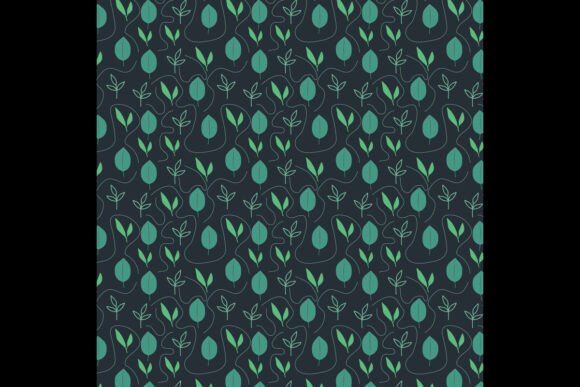
The Resurgence of Leaf Pattern Design: Nature's Blueprint for Modern Creativity
In an era defined by digital saturation and synthetic aesthetics, a quiet yet powerful shift is taking place across design disciplines. Leaf pattern design — the deliberate use of botanical, leaf-inspired motifs, structures, and rhythms in visual and spatial work — has moved far beyond mere decoration. It is emerging as a strategic, psychological, and cultural tool that resonates deeply with professionals, creators, and entrepreneurs alike. Whether applied in branding, product design, digital interfaces, or physical spaces, leaf pattern design offers a bridge between human instinct and modern innovation.
This article explores what leaf pattern design truly entails, why it is gaining momentum, and how you can harness its principles for relevant, impactful work in today's market.
Understanding Leaf Pattern Design: More Than Botanical Prints
At its core, leaf pattern design refers to the systematic arrangement of leaf-inspired forms — veins, silhouettes, clusters, and growth patterns — to create rhythm, hierarchy, and visual interest. However, reducing it to a mere aesthetic choice misses the deeper logic that makes it so effective. Leaves in nature follow principles of fractal geometry, asymmetrical balance, and efficient spacing. When designers translate these organic structures into their work, they tap into patterns that the human brain is evolutionarily wired to find pleasing, calming, and trustworthy.
Unlike geometric or abstract patterns that can feel rigid or cold, leaf pattern design introduces a sense of life and growth. It is inherently modular — leaves branch from stems, veins radiate from midribs, and clusters form canopies. This modularity makes leaf patterns highly adaptable across media, from a subtle watermark on a business card to a large-scale mural in a co-working space. For freelancers and entrepreneurs who need versatile visual systems, this adaptability is a practical advantage.
The Psychological Underpinning of Natural Patterns
Research in environmental psychology consistently shows that exposure to natural forms reduces stress, improves focus, and fosters creativity. Biophilia — the innate human affinity for nature — explains why leaf pattern design can make a website feel more welcoming or a product package more trustworthy. When a brand or creator uses leaf motifs, they are not just decorating; they are signaling authenticity, care, and connection. For marketers, this translates into deeper engagement and longer dwell time. For designers, it opens a palette of organic shapes that break the monotony of grids and symmetry.
Importantly, leaf pattern design does not require literal realism. Stylized, geometric, or even abstract leaf forms can evoke the same response as long as the underlying logic — branching, layering, and natural flow — remains intact. This gives professionals creative freedom while maintaining the psychological benefits.
Why Leaf Pattern Design Matters Now: The Context of Our Times
The renewed attention on leaf pattern design is not coincidental. It aligns with several convergent trends in business, technology, lifestyle, and culture. Understanding these forces helps explain why this design approach is resonating with audiences across sectors.
Post-Digital Fatigue and the Search for Tactile Humanity
After more than two decades of rapid digitization, consumers and professionals alike are experiencing digital fatigue. Screens, notifications, and constant connectivity have created a craving for experiences that feel tangible, grounded, and humane. Leaf pattern design answers this need by introducing organic softness into digital and physical spaces. A fintech app that uses subtle leaf motifs in its onboarding flow, for instance, signals trust and growth rather than cold efficiency. A freelancer's portfolio site with leaf-inspired dividers and backgrounds feels personal and unhurried — a differentiator in a crowded market.
This shift is visible in major brand redesigns as well. Companies that previously relied on stark minimalism are now incorporating natural textures and organic curves. Leaf pattern design offers a ready vocabulary for this transition without abandoning modernity. It is a way to remain contemporary while reconnecting with the natural world.
Sustainability as a Design Imperative
Sustainability is no longer a niche concern — it is a core expectation for businesses and creators. Leaf pattern design inherently communicates eco-consciousness. When used thoughtfully, it aligns a brand with values of renewal, cycles, and respect for natural systems. For entrepreneurs launching sustainable products, leaf motifs in packaging, labels, and digital assets create immediate visual alignment with their mission. This is not greenwashing when backed by authentic practice; it is visual storytelling that helps audiences quickly understand what a brand stands for.
Moreover, the modular nature of leaf patterns supports sustainable design practices. Because leaf motifs can be scaled, rotated, and repeated efficiently, they reduce the need for multiple asset variations, saving time and resources — a practical benefit for freelancers and small teams.
Practical Applications Across Disciplines
Leaf pattern design is not limited to one medium or industry. Its versatility makes it relevant for professionals working in branding, digital product design, interior architecture, content creation, and even strategic planning. Here are concrete examples of how it is being applied effectively.
Branding and Visual Identity
For marketers and entrepreneurs, a brand's visual identity must communicate values instantly. Leaf pattern design can serve as a secondary visual language that reinforces the logo and core message. A wellness brand might use delicate fern-like patterns in its stationery and social media templates. A tech startup focused on clean energy might use geometric leaf grids that feel innovative yet grounded. The key is to match the style of the leaf pattern — realistic, stylized, or abstract — to the brand's tone of voice. A luxury skincare line might prefer fine, detailed vein patterns, while an organic food brand could use bold, simplified leaf silhouettes.
Practical observation: Brands that use leaf pattern design often report higher recall in consumer testing, as the natural motifs create a distinct visual signature that stands out against competitors using generic geometric shapes.
Digital Interfaces and User Experience
In UI/UX design, leaf pattern design is appearing in background textures, icon sets, loading animations, and micro-interactions. The goal is not to overwhelm the content but to create a rhythmic, calming backdrop that guides the eye. For example, a productivity app might use a faint leaf-vein grid in its calendar view, subtly encouraging users to think of their schedules as organic growth rather than rigid blocks. A content creator's website might use animated leaf shadows that respond to mouse movement, adding a layer of delight without distracting from the message.
Accessibility is a natural win here: leaf patterns, when used with sufficient contrast and spacing, do not interfere with readability. In fact, they can improve scannability by creating visual breakpoints that help users navigate longer content.
Product Design and Packaging
Physical products benefit from leaf pattern design through embossing, debossing, foil stamping, or printed wraps. A subscription box for eco-friendly home goods might feature a repeating leaf motif that customers look forward to each month. The pattern becomes part of the unboxing experience, creating anticipation and satisfaction. For freelancers producing limited-edition merchandise, a signature leaf pattern can become a recognizable element that builds brand recognition over time.
Observation: Products that incorporate natural patterns often command a higher perceived value, as consumers associate the complexity and care of the design with quality.
Adapting Leaf Pattern Design to Evolving Workflows
Professionals today operate in fast-paced, multi-platform environments. Leaf pattern design must be systematic to be practical. Designers are increasingly creating pattern libraries where leaf motifs are categorized by scale, orientation, and complexity. This allows for rapid deployment across different formats — from social media stories to billboards — without starting from scratch each time.
For creators and marketers who are not trained designers, tools like vector generators, pattern builders, and AI-assisted design apps now include leaf pattern templates that can be customized. This democratization means that even solo entrepreneurs can implement professional-looking leaf patterns in their collateral. The trend is moving toward adaptive patterns that change based on screen size or user interaction, keeping the design fresh and responsive.
However, a word of caution: leaf pattern design, like any powerful tool, requires restraint. Overuse can create visual noise and dilute the intended effect. The most successful applications use leaf patterns as an accent or foundation, not as the sole visual element. Balance with negative space, solid color blocks, and clean typography ensures the pattern complements rather than competes.
Connecting to Larger Developments in Business and Culture
The rise of leaf pattern design is part of a broader cultural shift toward regenerative thinking. In business, this manifests as interest in circular economies, long-term value creation, and stakeholder well-being. Leaf patterns symbolize this mindset visually — they are not linear or finite but cyclical and expanding. For entrepreneurs pitching to investors or clients, using leaf pattern design in presentations can subtly communicate a forward-looking, sustainable vision.
In the creative industry, there is a growing rejection of uniform global aesthetics in favor of local, organic, and personal expression. Leaf pattern design, because it can be derived from native flora, offers a way to embed regional identity into design. A studio in Japan might use maple leaf motifs; one in Australia might use eucalyptus patterns. This localization appeals to audiences seeking authentic, place-based connections.
Technology is also a catalyst. Advances in generative design and parametric modeling allow designers to create leaf patterns that respond to data — weather, traffic, user behavior — making them dynamic and interactive. This intersection of nature and code is especially compelling for tech-forward brands and creators who want to demonstrate innovation without losing humanity.
Practical Guidance for Your Next Project
If you are considering integrating leaf pattern design into your work, start by asking three questions:
- What emotional tone do I want to set? Fine, delicate leaf patterns convey sophistication and calm. Bold, graphic leaf forms convey energy and approachability.
- Where will the pattern live? A pattern for a website background needs different contrast and scale than one for a product label. Always test the pattern in its intended context.
- How does the pattern relate to my core message? The pattern should reinforce your narrative, not distract from it. If your brand is about precision and clarity, choose leaf patterns with clean, linear veins. If your brand is about abundance and creativity, choose layered, overlapping leaf clusters.
Remember that leaf pattern design is a language, not a formula. Study how leaves grow in nature — the way they cluster to maximize light, the way veins distribute resources, the way they change with seasons. These biological principles can inspire not just visual patterns but also system architectures, content hierarchies, and user flows. The most insightful designers are those who see leaf patterns not as decoration but as a model for how things can be organized with elegance and efficiency.
Looking Ahead: The Enduring Relevance of Nature's Patterns
Leaf pattern design is not a passing trend. It is a return to a design logic that predates modernism and will outlast any short-lived aesthetic. As artificial intelligence and automation take over repetitive tasks, the uniquely human ability to draw meaning from nature becomes more valuable. Professionals who understand how to use leaf pattern design — not as a gimmick but as a thoughtful tool for communication and connection — will find themselves equipped to create work that feels both timeless and timely.
Whether you are a marketer rethinking a brand identity, a developer softening an interface, an entrepreneur launching a product, or a freelancer building a personal brand, leaf pattern design offers a rich, versatile, and psychologically grounded approach. It acknowledges our need for beauty, order, and connection in an increasingly complex world. And it reminds us that some of the best design solutions are not invented — they are observed.
By embracing leaf pattern design with intention and context, you are not just following a trend. You are participating in a broader movement to bring the wisdom of the natural world into the human-made one — one leaf at a time.