Understanding Flower Clipart Emoji PNG: A Practical Guide for Designers and Content Creators
When you need a floral accent for a digital project, the options can feel overwhelming. Illustrations, photographs, icons, and emojis all offer different ways to bring botanical elements into your work. Among these, Flower Clipart Emoji PNG has emerged as a distinct hybrid—combining the playful energy of emoji design with the practicality of clipart and the versatility of a transparent PNG format. Understanding what this category offers, where it fits best, and how it compares with other floral resources can help you make smarter choices for your specific project.
What Flower Clipart Emoji PNG Actually Is
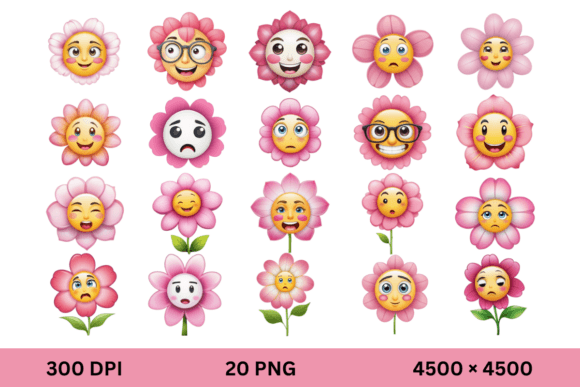
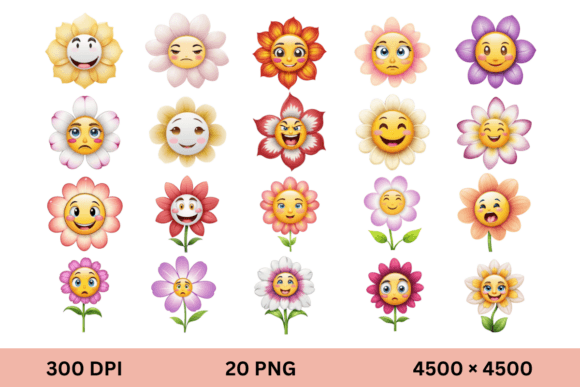
At its core, Flower Clipart Emoji PNG refers to a floral graphic that borrows visual cues from emoji design—vivid colors, simplified shapes, and a slightly cartoon-like appearance—while being packaged as a standalone PNG file with a transparent background. Unlike emoji characters that are locked inside a font system or limited to specific platforms, these files can be placed directly into documents, social media graphics, websites, or printed materials without needing special software or font support.
The distinct visual style sets it apart. Emoji-derived florals tend to be more stylized than realistic clipart. Petals are often chunkier, colors are more saturated, and the overall impression is friendly rather than botanical. This makes the style a natural fit for casual, welcoming, or youth-oriented content. At the same time, because the file comes in PNG format, you retain full control over sizing, layering, and placement without worrying about background boxes or alignment issues.
The format also preserves transparency, which is a significant practical advantage. You can drop the flower onto any colored background, overlay it onto photos, or combine it with other graphic elements without messy white edges. This flexibility is one of the key reasons why designers and non-designers alike turn to Flower Clipart Emoji PNG when they need a quick, reliable floral accent.
How It Compares with Other Floral Graphics
To decide whether this style is right for you, it helps to see how it stacks up against the common alternatives. Each approach has its own strengths, and the best choice depends heavily on your audience, platform, and design goals.
Versus Traditional Clipart
Conventional floral clipart often aims for a more realistic or detailed look. You might find intricate line art, watercolor effects, or photographic textures. While these can be beautiful, they also demand more careful placement. The detail can clash with simple layouts, and the colors may not pop as brightly on screen. Flower Clipart Emoji PNG, by contrast, is engineered for clarity and impact at small sizes. The simplified shapes and bold colors hold up well even when reduced to a thumbnail or used as a small accent. If your project needs a floral element that reads instantly and remains legible at multiple scales, the emoji-inspired style often outperforms traditional clipart.
Versus Standard Emojis
Regular emojis are convenient, but they come with limitations. They are tied to a specific operating system or platform, which means the same flower can look completely different on an iPhone versus an Android device or in a web browser. You also cannot resize them independently, and they always appear within a text block or alongside other emojis. Flower Clipart Emoji PNG removes these constraints. You get a consistent visual regardless of the viewer’s device, and you can scale, rotate, or recolor the graphic as needed. The tradeoff is that you lose the effortless typing integration that emojis offer. If you need to insert a flower quickly into a sentence, an emoji character is faster. If you need design control and cross-platform consistency, the PNG version wins.
Versus Vector Illustrations
Vector files like SVG offer infinite scalability and easy recoloring, making them a favorite among professional designers. However, vectors require vector editing software and some technical knowledge. Opening, editing, and exporting an SVG can be a barrier for someone who just wants to drop a graphic into Canva, a social media post, or a Word document. Flower Clipart Emoji PNG fills this gap. It provides a polished, ready-to-use image that needs no additional software. The tradeoff is that you cannot easily change the colors or scale it up infinitely without losing quality. For projects that require strict brand colors or oversized prints, vectors are the stronger choice. For everyday digital use and printed materials up to moderate sizes, the PNG version is far more accessible.
Strengths and Where It Shines
Flower Clipart Emoji PNG excels in several common scenarios. Social media content is one obvious area. The bright, friendly aesthetic aligns well with Instagram stories, Facebook posts, Pinterest pins, and TikTok overlays. The transparent background means you can layer flowers over photos, gradient backgrounds, or patterned surfaces without extra editing steps. The style also works well for digital invitations, event flyers, and newsletters that aim for a light, cheerful tone.
Another strong use case is educational or informational material aimed at a general audience. If you are creating a wellness guide, a gardening tip sheet, or a community event poster, the emoji-inspired floral adds visual interest without looking overly corporate or technical. It signals approachability. The same graphic that feels too casual for a legal document or a financial report can be exactly right for a health blog, a recipe card, or a children's activity sheet.
For small business owners and independent creators, convenience matters. The Flower Clipart Emoji PNG format reduces the time spent searching for the right visual. You do not need to commission custom illustrations or learn vector editing. You download, insert, and move on. This speed is valuable when you are managing multiple tasks and need reliable assets that do not require a steep learning curve.
Limitations and When to Look Elsewhere
No single format solves every problem, and Flower Clipart Emoji PNG has clear boundaries. If your project demands photorealism or sophisticated artistic styling, this is not the right choice. The simplified, cartoon-like appearance can feel out of place in a luxury brand brochure, a fine art context, or any setting that relies on subtlety and texture. A photograph or a custom watercolor illustration would serve that purpose better.
Similarly, if you are designing for large-format printing—such as a banner, a billboard, or a trade show display—the resolution constraints of a PNG may become visible. While many PNG files are high resolution, they are still raster images. Enlarging them beyond their native size leads to pixelation. For those applications, a vector format remains the gold standard.
Brand consistency is another factor. If your organization uses a specific shade of green or a particular floral motif across all materials, a pre-made Flower Clipart Emoji PNG may not match. Custom vectors or commissioned illustrations give you full control over color accuracy and brand alignment. The emoji-inspired style, by design, tends toward a universal, platform-agnostic look that can feel generic if overused.
Decision Factors to Consider
When evaluating whether this graphic style fits your project, ask yourself a few practical questions. Who is your audience? If they are expecting a polished, corporate tone, the playful emoji aesthetic may feel mismatched. If your audience is looking for warmth, simplicity, or a touch of fun, the style is likely a good match.
What is the delivery medium? Digital screens are forgiving for PNG files, and the transparent background is a major asset. For print, check the resolution requirements ahead of time. If you are printing at standard office or home sizes, most high-quality PNG files will work fine. For professional-grade large prints, verify the pixel dimensions first.
How much control do you need over the final look? If you want to flip, layer, or mask the flower, PNG gives you that flexibility within limits. If you need to change the petal color or tweak the stem length, a vector or an editable illustration is more appropriate.
Practical Examples of Use
Imagine you are creating a social media post for a community garden event. You want a floral accent that reads immediately, layers well over a photo of the garden, and does not distract from the text. A Flower Clipart Emoji PNG placed in the corner adds color and context without competing for attention. The transparency lets the background photo show through, and the cheerful style reinforces the outdoor, welcoming theme.
Now consider a different scenario: you are designing a thank-you card for a high-end wedding. The same style would likely feel too casual. A delicate botanical line drawing or a soft watercolor floral would match the elegance of the occasion. The emoji-inspired flower, while charming, would undermine the tone you need to convey.
For a classroom handout about plant life cycles, the simplified form of Flower Clipart Emoji PNG can be a teaching asset. The clear shapes help students identify flower parts without the distraction of intricate detail. Combined with simple labels, the graphic supports learning rather than overwhelming it.
Making an Informed Choice
The value of Flower Clipart Emoji PNG lies in its balance of accessibility, visual appeal, and practical flexibility. It is not a replacement for professional vector art or high-resolution photography, and it does not need to be. It serves a specific range of tasks where ease of use, cross-platform consistency, and a friendly aesthetic matter most.
When you choose this format, you are prioritizing speed and reliability over customization and photorealism. That tradeoff is entirely appropriate for many everyday projects. The key is recognizing when the tradeoff works in your favor and when a different format would better serve your goals. By understanding what this hybrid style offers and where its boundaries lie, you can select the right floral graphic with confidence, saving time and producing results that genuinely connect with your audience.