12 International Day Clipart Set: A Practical Guide for Creators and Marketers
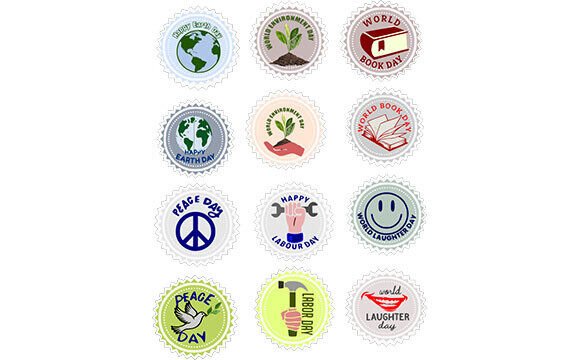
If you create content, design marketing materials, or manage social media for a brand, you have likely searched for visuals that represent global observances. A 12 International Day Clipart Set can save you hours of hunting for individual images. Instead of piecing together clipart for Earth Day, World Health Day, International Women’s Day, and other dates, you get a curated collection that covers the year. That sounds convenient—and it can be—but rushing into a purchase without checking a few key details often leads to frustration, wasted money, or designs that fall flat.
Below, I will walk through the common mistakes people make when choosing and using these sets. More importantly, I will share what to look for so your next set actually improves your workflow instead of adding to your to-do list.
Overlooking Resolution and Scalability
The most frequent mistake I see is assuming all clipart in a set is high resolution. You open the files, drop one into a banner, and it looks crisp. Then you try to use the same image on a poster or a large screen, and it turns into a pixelated mess. That happens when the set mixes vector and raster files without clear labeling.
Why this matters: If you plan to use these cliparts across different platforms—social media graphics, flyers, presentations, or even merchandise—you need images that scale cleanly. Raster files (like PNG or JPG) have fixed dimensions. Vector files (like SVG or EPS) can be resized without losing quality.
What to check before buying: Look for a set that includes vector formats alongside high-resolution PNGs. A good 12 International Day Clipart Set will state the resolution (300 DPI is standard for print) and specify whether vector files are included. If the description only mentions “high quality” without numbers, ask the seller or look for sample downloads. Test one file at different sizes if possible.
Better approach: Prioritize sets that offer both SVG or EPS files and transparent PNGs. That way, you can resize freely for print projects and drag PNGs straight into social media tools without extra steps.
Ignoring Licensing Terms Until After You Publish
Licensing might seem like legal boilerplate you can skip, but it matters more than most people assume. I have spoken to small business owners who used a clipart set for a product label, only to discover later that the license prohibited commercial use. The result was either a redesign or a quiet worry every time someone bought that product.
Common licensing pitfalls: Some sets restrict use to personal projects only. Others limit the number of copies you can print or the number of times you can use the image in digital media. A few require attribution, which can clutter your design or your social media caption.
What to look for: The set should clearly state whether it allows commercial use, how many impressions or copies are allowed, and whether attribution is required. For most creators and marketers, a royalty-free license that covers both personal and commercial use without attribution is ideal. If you run a print-on-demand shop or sell digital products, confirm that the license explicitly covers those use cases.
Practical tip: Save the license file in the same folder as your clipart. That way, if a platform asks or a client questions your rights, you can point to it immediately.
Choosing Style Over Consistency
When you browse a 12 International Day Clipart Set, every image looks appealing on its own. The trouble starts when you use them together in a single campaign. One illustration might be a flat vector style, another a detailed watercolor look, and a third a minimalist icon. Put them side by side, and your design feels disjointed.
The real cost: Inconsistent visual style undermines your brand identity. Whether you are a blogger creating a year-long content calendar or a marketer designing a series of social posts, viewers notice when images look like they came from different collections. It signals a lack of attention to detail.
What to check: Look at the preview images carefully. Do all the cliparts share a similar line weight, color palette, and level of detail? A well-curated 12 International Day Clipart Set will maintain a cohesive aesthetic across all 12 (or more) images. If the thumbnails look like they were drawn by different artists, expect that inconsistency to carry into your work.
Better approach: Decide on your brand’s visual style before you search. If you prefer clean, modern flat icons, filter your search to sets that match that. If you need illustrated scenes with depth, find a set that stays true to that look throughout. Consistency makes your designs look intentional and polished.
Misjudging Cultural Relevance and Accuracy
International days often carry cultural or historical significance. A clipart set that tries to represent these days with generic symbols can miss the mark or, worse, offend your audience. For example, using a generic globe for every observance ignores the specific imagery associated with each day—like a stethoscope for World Health Day or a balance scale for International Day of Peace.
Why this happens: Some creators design clipart based on quick online searches rather than genuine understanding. The result is imagery that feels disconnected or stereotypical.
What to evaluate: Look at each clipart in the set and ask yourself if it clearly communicates the theme of that international day. Does the World Food Day clipart show food and agriculture, or is it a generic earth icon? Does the International Women’s Day image use inclusive symbols that resonate with current conversations?
If you are unsure, check the seller’s description for any notes about research or collaboration with cultural consultants. That is a good sign of thoughtful design.
Practical advice: If you find a set that is mostly accurate but has one or two images that feel off, consider whether you can supplement those with custom illustrations or additional purchases. Do not settle for a full set that contains potentially misleading or reductive imagery.
Underestimating File Format Limitations
File format might sound like a technical detail you can ignore, but it directly affects how you use the clipart. I have seen designers buy a set that only comes in PNG format, then realize they cannot change the colors to match their brand palette. Others download a set that uses CMYK for print but looks dull on screen.
Key considerations:
- PNG works well for digital use but is not easily editable.
- SVG or EPS allow you to change colors, resize without quality loss, and separate elements.
- AI or CDR files are great if you use Adobe Illustrator or CorelDRAW, but less useful if you work in Canva or simpler tools.
- Color mode: RGB for digital, CMYK for print. Some sets provide both, which is ideal.
What to verify: Before you purchase, check which file formats are included and whether they match your typical workflow. If you design in Canva, make sure the set includes PNG files with transparent backgrounds. If you work in Illustrator, look for SVG or AI files. A versatile 12 International Day Clipart Set will include multiple formats to cover both digital and print needs.
Better habit: Keep a short list of the formats you actually use. When you browse a clipart set, compare that list against what is offered. This simple check saves you from buying something you cannot open or use intuitively.
Overlooking Color Harmony and Brand Fit
Many clipart sets come in preset color palettes. Those colors may look vibrant in the product preview but clash with your brand colors or the mood you want to convey. For instance, a set with neon tones might not suit a wellness blogger’s calming aesthetic. Similarly, a set with muted earth tones might feel flat for a youth-oriented campaign.
The impact: Using clipart that does not align with your color scheme forces you to spend extra time editing—if you can edit at all. If the files are flattened PNGs, you are stuck with the original colors. That mismatch can make your designs feel amateurish or off-brand.
What to check: Look at the full set preview and note the dominant colors. Do they include neutral tones that blend easily with your palette? Are the colors saturated or subdued? If the set offers vector files, you can recolor elements, but that takes time. If you prefer a ready-to-use solution, find a set that already aligns with your brand’s color language.
Practical approach: Save a color swatch of your brand palette. When you preview a 12 International Day Clipart Set, mentally compare the set’s colors to your swatch. If most images contain colors you can work with, the set is worth considering. If every image uses colors you rarely include, move on to another option.
Rushing Past the Preview Details
Marketplace listings often show a few selected images, not the full set. I have seen people buy a 12 International Day Clipart Set based on the first three or four images, only to discover that the remaining cliparts are lower quality, have awkward compositions, or repeat similar concepts.
Why this happens: Sellers want to make a strong first impression, so they feature the best images. The less polished ones are tucked away in the full preview or mentioned only in passing.
What to do: Always scroll through the entire preview. If the listing does not show every image, look for a link to a complete gallery or request a sample. Count the number of images—if the set claims to cover 12 international days, make sure all 12 are clearly displayed. Examine each one for consistency, detail, and accuracy.
Better strategy: Bookmark sets that offer a full preview. If a seller hides half the images, that is a red flag. A confident creator will show you exactly what you are getting.
Neglecting to Plan How You Will Use the Set
It is easy to buy a comprehensive clipart set because it seems like a good deal, then never actually use most of the images. I have done this myself. The set sits in a folder, and you keep searching for individual cliparts because you forgot what you own or the files are not organized.
The real loss: The cost is not just the purchase price. It is the time spent sorting, the missed opportunity to create cohesive content, and the frustration of having a tool you do not use effectively.
What to consider before buying: Look at your content calendar for the next 6 to 12 months. What international days are relevant to your niche? Are you likely to create content for all 12 days, or only a handful? If you only need imagery for three of them, a smaller bundle or individual purchases might serve you better.
Practical advice: When you find a 12 International Day Clipart Set that fits your needs, download it and immediately organize the files into folders by observance name. Rename files clearly so you can search for them later. That small step turns a collection into a working library.
Final Thoughts on Choosing Wisely
A well-chosen 12 International Day Clipart Set can streamline your content creation, reinforce your brand, and help you communicate more clearly with your audience. The key is to evaluate resolution, licensing, style consistency, cultural accuracy, file formats, color harmony, and completeness before you commit. When you take those few extra minutes to check these details, you end up with a set that actually saves you time and elevates your work—not one that collects digital dust.
Next time you see a promising set, open this list and run through it. You will be glad you did, and your designs will show the difference.